Individual



You did it!
Here's how you performed
You're making informed choices!
Being well informed puts you in a stronger position to plan for life's uncertainties.

 Take the Quiz!
A ULIP plan is perfect for:
These plans are a good fit if you are saving money for your retirement or child’s education, etc.
Depending on your risk appetite, you may choose funds such as equities, debt, or other asset classes.
Whether you are nurturing a family or planning to retire, ULIPs can help you achieve goals at any stage in your lifetime.
One benefit of starting early is that the premiums are affordable, and your investment will have more time to grow.
Ideal if you want dual benefits of investment and insurance in a single plan.
Working professionals can create a retirement fund by availing long-term capital appreciation while adjusting their investment based on market conditions.
A Unit-Linked Insurance Plan (ULIP) is a financial product that combines the benefits of life insurance cover and investment in one plan. When a policyholder buys a ULIP, a portion of the premium paid goes towards securing the life insurance plan and the remainder is invested.
ULIPs offer a high degree of flexibility, allowing you to invest across funds based on your risk appetite. Because returns are market-linked, ULIPs are best suited to long-term goals — wealth creation or retirement.
Under a ULIP, the investment risk in the portfolio is borne by you as the policyholder. Here is what happens to every premium you pay:
A portion goes to your life insurance cover; the rest is invested in the equity and debt fund options you choose.
The invested corpus is divided into ‘units’ with a specific face value, allocated in proportion to your investment.
Each unit's value is its Net Asset Value (NAV), reflecting increases or decreases in the underlying assets.
Partial withdrawals after the lock-in sell the corresponding number of units at prevailing NAV.
Maximal wealth appreciation through market-linked instruments while your life cover protects your family.
Move between equity and debt funds at any time during the policy term, with a fixed number of free switches each year.
Redirect future premiums between available fund options at any time to match your evolving goals.
After the 5-year lock-in, make a fixed number of partial withdrawals from your fund value without additional charges.
Receive the fund value at maturity, built through disciplined long-term market-linked investing.
Your nominee receives the higher of sum assured or fund value, keeping your family's goals secure.
Stay invested longer and earn extra units added to your fund value as a reward for continued premiums.
Align fund choices with life goals — education, home, retirement — on one flexible platform.
Buying a ULIP is a viable strategy to grow your savings through market-linked returns while staying protected. The global ULIP market was valued at $1.1 trillion (Allied Market Research, Aug'25) — and for good reason:
Manage your money — change fund allotments to secure or grow your corpus as markets move.
Track NAVs and fund performance openly; you always know where your money is invested.
Comprehensive maturity and death benefits keep your family's future protected.
Healthy market-linked returns in the long run, plus significant tax savings as per prevailing laws.
A ULIP plan is perfect for:
A good fit if you are saving for retirement, a child's education, or another distant milestone.
Choose equities, debt, or balanced funds depending on how much risk you're comfortable taking.
Whether you're nurturing a family or planning to retire, ULIPs adapt to your stage of life.
Start early: premiums are affordable and your investment gets the longest runway to compound.
Ideal if you want long-term financial goals and life cover handled in a single product.
Keep these four things in mind while choosing the best unit linked insurance plan in India:
Equities offer high growth potential for the long term; debt funds offer stability. Match the mix to each goal.
Size your cover to long-term goals such as your children's higher education or your retirement.
Staying invested 10–15 years helps grow wealth and beat volatility (Kotak Institutional Equities, 2024).
Compare plans on 80C deductions and 10(10D) maturity benefits under prevailing tax laws.
ULIPs channel your premiums into professionally managed, market-linked funds while compounding works over the policy term. Loyalty additions, fund switches, and top-ups let you steer the corpus toward your goals as markets and life circumstances change.
Map each financial goal to a time horizon before allocating funds: shorter horizons favour debt-oriented funds; longer horizons can carry more equity exposure. Review the mapping annually so your allocation always matches the years remaining to each goal.
Strengthen your base cover with optional riders available on Axis Max Life plans:
Pays a lump sum on diagnosis of listed critical illnesses or disability, cushioning income shocks during treatment.
Enhances protection with additional cover options for accidental death and disability at a nominal extra premium.
Buying a ULIP from Axis Max Life Insurance takes just a few minutes:
Go to the official Axis Max Life Insurance website.
Select Investment Plan and enter your name, date of birth, gender, etc.
Click ‘View Plans’ and explore the products listed.
Enter personal details, check your premium estimate and click ‘Proceed’.
Select Net Banking, Credit Card, UPI, or another payment option.
Complete the payment and enjoy the perks of your ULIP.
Like other life insurance plans, you must meet a few prerequisites before buying a ULIP:
You must fall within the plan's minimum and maximum entry age; limits vary by product.
Resident status requirements apply; NRIs may be eligible subject to plan terms.
Keep identity, address, and income proofs handy for a smooth KYC process.
A medical examination may be required depending on age and the cover you choose.
How ULIPs compare against other popular instruments on the parameters that matter:
| Option | Life Cover | Market-Linked Returns | Tax Benefit* | Lock-in |
|---|---|---|---|---|
| ULIP | ✓ Included | ✓ Equity & debt funds | 80C + 10(10D) | 5 years |
| Mutual Funds | ✗ None | ✓ Market-linked | ELSS only | None / 3 yrs (ELSS) |
| Traditional Life Insurance | ✓ Included | ✗ Fixed/bonus based | 80C | Policy term |
| PPF | ✗ None | ✗ Fixed, govt-set | 80C (EEE) | 15 years |
| NPS | ✗ None | ✓ Market-linked | 80C + 80CCD(1B) | Till age 60 |
| Fixed Deposits | ✗ None | ✗ Fixed rate | Tax-saver FD only | Varies / 5 yrs |
See how much wealth your ULIP can build. Get your personalised premium estimate in under 2 minutes.
Check PremiumFreedom to choose your retirement age · Partner Care Rider for spouse security · equity-linked returns with downside protection · guaranteed loyalty additions from the 10th policy year · "Save more tomorrow" top-ups · tax benefits on premiums.
Flexible premium and policy terms with wealth boosters, wide fund choice, and life cover — built to flex with your goals.
Inbuilt life cover with zero policy-admin and premium-allocation charges — more of your premium gets invested.
Secure your child's education with equity participation, multiple fund options, and premium funding on death.
| ULIP Plan Name | Key Features & Benefits |
|---|---|
| Axis Max Life Fast Track Super Plan | Achieve long-term goals while securing your future; multiple fund strategies. |
| Axis Max Life Platinum Wealth Plan | Secure your family's future with comprehensive maturity and death benefits. |
| Axis Max Life Online Savings Plan — Variant 1 | Inbuilt life cover with flexibility to increase cover; zero allocation charges. |
| Axis Max Life Online Savings Plan — Variant 2 | Triple protection: lump sum payout, monthly income, and premium waiver. |
| Axis Max Life Shiksha Plus Super Plan | Equity-market participation with multiple fund options for a child's future. |
Build a retirement corpus during your earning years; annuity-ready payouts when you stop working.
Equity-oriented plans focused on maximising long-term wealth appreciation.
Goal-protected plans that fund your child's milestones even in your absence.
Snapshot of flagship funds against their benchmarks (5-year returns):
Open-ended multi-cap equity fund focusing on midcaps with long-term high-growth potential.
Open-ended debt fund with preference for government securities, suited to systematic transfer plans.
See the full fund list with 1/3/5-year returns in the fund cards carousel on the Investment Plans page. Past performance is not indicative of future returns.
Invests in government securities and corporate bonds — stability first, steady returns.
Invests in stocks for high growth potential over long horizons; higher volatility.
Blends equity and debt to balance growth with downside cushioning.
The longer your money stays invested, the more compounding works in your favour.
Stay invested beyond the lock-in; ULIPs reward long-term discipline with loyalty additions.
Diversify across equity and debt funds in line with your risk appetite.
Use free fund switches to rebalance as markets and life goals change.
Claim deductions u/s 80C and tax-free maturity u/s 10(10D), as per prevailing tax laws.
An effective ULIP strategy aligns fund selection with goals and horizon: begin equity-heavy while goals are distant, glide toward debt as they approach, use top-ups in market dips, and let loyalty additions accumulate by staying the full term.
A ULIP calculator is a tool that helps you determine the maturity amount under a unit linked insurance plan based on your monthly investment, tenure, and expected growth rate.
You get: ₹20k/month invested in 2005 would have been
₹4.31 Cr nowCompounding grows your investments with time. An illustration for a Wealth Plan at ₹10,000/month over a 10-year investment tenure, held for 20 years:
| Type of ULIP | Monthly Contribution | Investment Tenure | Corpus after 20 yrs @4% p.a. | Corpus after 20 yrs @8% p.a. |
|---|---|---|---|---|
| Wealth Plan | ₹10,000 | 10 years | Illustrative corpus at 4% | Illustrative corpus at 8% |
Assumed rates of 4% and 8% p.a. are illustrative only, as per IRDAI-permitted illustrations; actual returns depend on fund performance.
Premiums paid qualify for deduction under Section 80C (old tax regime).
Maturity benefits are exempt u/s 10(10D), subject to prescribed premium conditions.
If annual ULIP premiums exceed ₹2.5 lakh, returns on the excess become taxable as per current rules.
Claim the exemption (up to ₹1.5 lakh under 80C) when filing your return by declaring the ULIP premium under eligible deductions, retaining premium receipts and the policy statement as proof. Maturity proceeds are reported under exempt income u/s 10(10D) where conditions are met.
Know the charges before you invest — many Axis Max Life online plans waive several of these:
Deducted upfront from premium before units are allocated.
Annual charge for managing the fund, adjusted in NAV.
Monthly charge for policy servicing and administration.
Cost of the life cover, based on age and sum at risk.
Applies if the policy is discontinued during the lock-in.
May apply after you exhaust your free fund switches.
May apply on redirecting future premiums beyond free limits.
May apply beyond the free partial-withdrawal limit post lock-in.
Not comfortable managing investments? Opt for systematic, rule-based switching managed for you.
Change premium allocation yourself based on your investment view and goals.
Invest surplus money over and above premiums to accelerate wealth appreciation.
Monitoring NAV shows your fund's performance relative to benchmarks.
Use economic indicators and market trends to rebalance via free switches.
Know what you're investing for from the very beginning.
Choose equity, debt, or balanced funds based on the risk you can carry.
Understand every charge so you know exactly what reaches the market.
Past results don't guarantee success, but they reflect fund quality.
Pick ULIPs that flex with life changes, and plan around the 5-year lock-in.
ULIPs are designed for long-term wealth creation, not quick profits.
Check your fund's progress regularly and switch when consistently underperforming.
Mortality, admin, and fund-management charges affect net returns — know them.
Early withdrawals break the force of compounding and limit potential gains.
Always invest with a clear goal so fund choices and tenure fit the purpose.
ULIPs suit disciplined, goal-based investors with a medium-to-long horizon who want market participation without giving up life cover — from young professionals starting early to families planning education and retirement milestones.
Popularity brings misconceptions. Here's the myth vs. the fact:
The ULIP lock-in period is a mandatory feature that promotes disciplined, goal-oriented investing. After 5 years, partial withdrawals unlock — and staying invested longer keeps compounding and loyalty additions working.
ULIPs suit those seeking long-term options: market conditions may affect short-term returns, but a long investment term supports compounding through cycles. For retirement, children's education or marriage, and wealth building, risk-adjusted fund choices keep the plan aligned to your comfort.
Total current value of the units you hold across funds.
The guaranteed life-cover amount paid to your nominee.
Moving your money between equity, debt, and balanced funds.
Amount payable if you exit the policy before maturity.
Fees like allocation, fund management, and mortality charges.
Per-unit value of the fund, updated with market movement.
A ULIP bought with one lump-sum premium payment.
Optional add-on covers like critical illness or accident protection.
Raising a claim against the life coverage under your ULIP is simple:
Notify Axis Max Life online, by phone, or at a branch to initiate the claim.
Provide the policy document, claimant's ID, and other required proofs.
The claim is assessed and, once approved, settled to the nominee's account.
Even though Shyam invested ₹18 lakh MORE than Ram, his retirement corpus is significantly smaller!
Due to Ram's longer investment period, the power of compounding worked in his favor. He ended up with a retirement corpus that is almost ₹1 crore larger than Shyam's, despite investing significantly less!
It is recommended to invest in a mix of different asset classes like government schemes (like PPF) and market-linked investment products (like mutual funds) to get good returns. However, keep in mind your financial goals, risk appetite, and investment tenure before you begin. For long-term goals, consider investing in ULIPs, 5-year fixed deposits (FDs).
For short-term goals, 1 to 3-year FDs, liquid funds, corporate FDs, etc are good. In contrast, if you are planning your retirement goals, you have options like NPS, pension plans, voluntary provident fund (VPF), etc.
To earn higher returns, you need to invest in instruments with higher risk levels, such as market-linked plans, stocks, and equities. These investment instruments generally require investment for a long term. Here is a list of high-risk investment options that offer higher returns over the long term:
Irrespective of the amount you wish to invest, it is prudent to assess your risk appetite along with your investment tenure. If you do not want to take a risk, consider investment options like a post office FD or a bank fixed deposit. You can earn an attractive rate of return based on the investment tenure you select.
You can also invest in liquid mutual funds of your choice if you are willing to take additional risk.
To earn a monthly income from your investment of 20 lakhs, you can consider investment in a mix of safe and market-linked instruments. Before you begin, assess your risk appetite, financial goals, and amount per instrument.
Some low-risk, secured investment instruments are fixed deposits, post office monthly income scheme, and senior citizen savings scheme, etc. High-risk, high-returns investment options include unit-linked insurance plans, stocks, and real estate investments, etc.
The choice of investment would depend on multiple factors, including your age, risk appetite, and expected income from the investment. Some options include
However, it is advisable not to invest your corpus in any one instrument.
Here are the common mistakes which you need to be mindful of. Make sure to avoid them:

If missed/delayed payments start piling up, then it will severely lower your credit score. So, pay your EMIs or credit card bills on time.
Moreover, lenders might feel that you’ll use up the credit of all the cards even if you don’t use all of the available credit. It’s one of the common mistakes that impact credit scores. So, it’s best to avoid it.
Otherwise, it will hurt your overall credit report and decrease your credit score.
When someone has multiple unsecured loans, it indicates he/she might be financially overburdened with debt. Furthermore, it denotes such persons as risky candidates. Lastly, always remember that if you have numerous active unsecured loans, it’ll have a major negative impact on your credit score.
Apart from lowering your credit score, there’s another side effect. It cuts down on your negotiating options with the lender. As a result, you might receive credit, but on unfavourable terms and conditions.
Late payments might remain recorded in the credit report for many years. You will face questions regarding late bill payments if you apply for loans. You can set payment reminders or set up the auto-pay option to avoid late payments.
You should try your best not to let the credit utilisation rate rise above 30%. Otherwise, your credit score can come down greatly. So, what can you consider? Try to pay off your credit card dues in time. Use other payment methods until you’ve cleared your credit card dues.
Moreover, if you track your credit report regularly, then you’ll also come to know when your credit score is on the fall and take steps to rectify the situation.
Building a good credit record can be time-consuming. So, develop good financial habits early on and consciously avoid making the 10 common mistakes that can decrease your credit score. It will be easy for you to build creditworthiness.
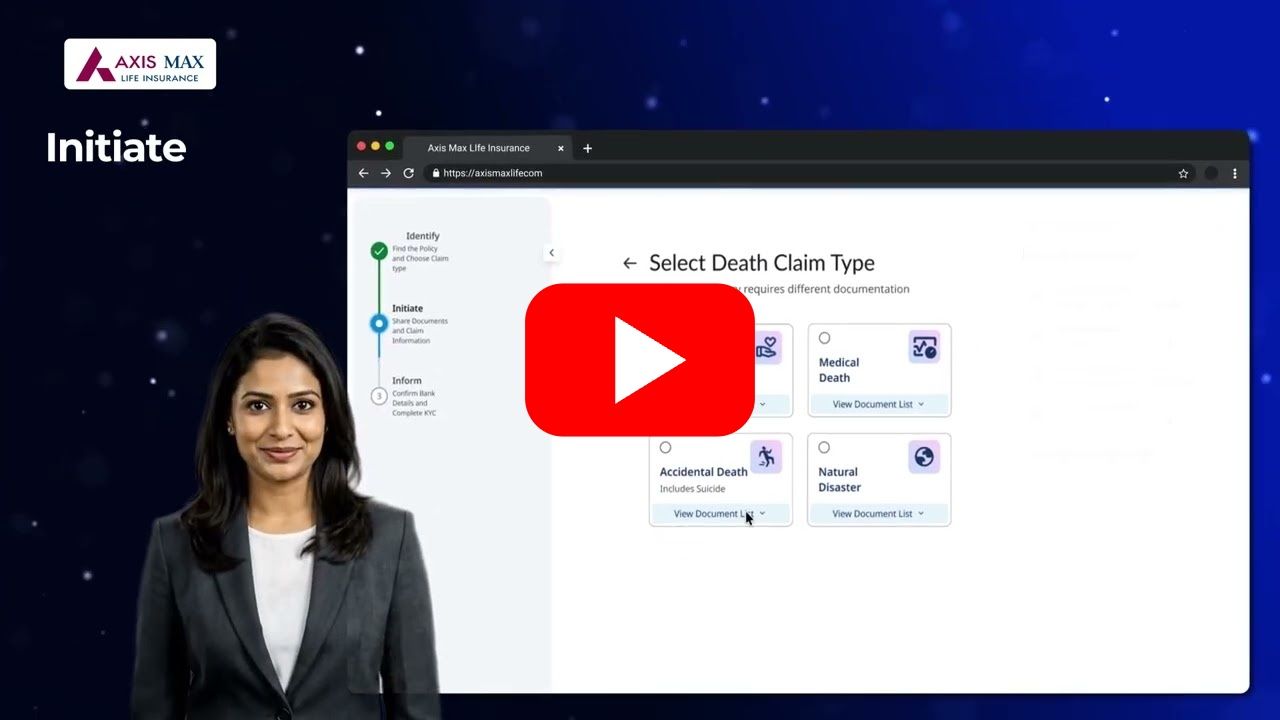
Watch How to File a Claim Online
A term insurance plan provides a large life cover at an affordable premium. If the policyholder passes away during the policy term, the nominee receives the full sum assured as a death benefit.
The sum assured in a term plan is typically recommended to be 10–15 times your annual income to ensure your family can maintain their standard of living and meet long-term financial obligations.
Term insurance premiums are determined by the policyholder's age, health, lifestyle habits, sum assured, and policy term. Buying at a younger age locks in lower premiums for the entire duration.


Was the Information Helpful?
Very Good

Learn the basics of how credit score is calculated, what are the factors impacting your credit score and the key benefits of having a good credit score in India.
Read More
A good credit score is important when applying for a new loan or credit card. Know 5 ways to easily increase your credit score to improve your eligibility for additional credit.
Read More
Power of Compounding can help you secure the long-term goals while planning your investments better. Use Power of Compounding Calculator to check the math on Max Life Insurance.
Read MoreReal questions and top answers from Reddit communities - unfiltered opinions from actual policyholders and financial planners.
These are independent user opinions from Reddit and do not represent the views of Axis Max Life Insurance. Clicking a card opens the original discussion on Reddit.
Watch How to File a Claim Online
Watch How to File a Claim Online
Watch How to File a Claim Online
Watch How to File a Claim Online
How Much Pension Do You Want Every Month?
Watch How to File a Claim Online

Axis Max Life Smart Secure Term Insurance Plans
1 Crore


Documents you'll need
You will need a few documents to get started. If something is missing right now, it's ok. We'll guide you as you go.
 Indian
Watch How to File a Claim Online
Under a unit linked insurance plan (ULIP), the investment risk in the portfolio is borne by you (as a policyholder.) The primary purpose of buying the best ULIP is to secure your loved ones financially against any unforeseen events.
LIFE ADVISOR · AXIS MAX LIFE
former Air India air hostess who went on to spend 14 years as a homemaker and proud partner to a highly decorated Air Force pilot who rose to…
former Air India air hostess who went on to spend 14 years as a homemaker and proud partner to a highly decorated Air Force pilot who rose to the rank of Air Marshal, she has always inhabited a world where excellence is the baseline. When Axis Max Life Insurance knocked on her door, she took it on as a personal challenge — and proceeded to excel, in the way that only someone of her calibre could. An avid golfer, a culinary artist now sharing her skills with many, an interior designer, and a passionate animal welfare volunteer in her community, Sunita brings a remarkable richness of life experience to everything she does. Her advisory philosophy is built on three commitments: always put the client first, stay motivated through your own rewards, and grow with the company — because in this profession, when everyone wins, everyone wins together. Her goal for 2026 is to keep the momentum going and hit the bull’s eye.
LIFE ADVISOR · AXIS MAX LIFE
Coming from a science background and having spent her formative years as a homemaker, she developed the understanding of family aspirations,…
Coming from a science background and having spent her formative years as a homemaker, she developed the understanding of family aspirations, financial anxieties, and the quiet strength it takes to build a secure future which ultimately lit the spark for her entry into the financial services world — not from outside inspiration, but from a deeply personal need to create an identity where her skills and efforts could make a real difference. An avid traveller and music lover, she brings curiosity and warmth to everything she does. Her success mantra is built on consistent performance, hard work, and integrity, and her goal is as meaningful as her journey: to help families make informed financial decisions and bring stability, happiness, and confidence to their lives.
LIFE ADVISOR · AXIS MAX LIFE
He came to Axis Max Life Insurance almost by coincidence — a casual visit to the office that turned into a calling when he saw the warmth,…
He came to Axis Max Life Insurance almost by coincidence — a casual visit to the office that turned into a calling when he saw the warmth, training, and care embedded in the organisation’s culture. A Mumbai-based family man who was previously in the office automation business, he is also a professional musician and co-founder of a band called Dreams Unplugged, having performed on television and on stage with a passion that carries over into everything he does. The moment that truly changed his relationship with insurance was the death claim of a close friend — an experience that made him see the profession not as a job, but as a responsibility. His mantra — focus on advising rather than selling — is not a strategy. It is the belief at the core of who he is as a professional.
LIFE ADVISOR · AXIS MAX LIFE
He is a name synonymous with excellence in the insurance advisory world. One of the highest honours in the global insurance profession — he has…
He is a name synonymous with excellence in the insurance advisory world. One of the highest honours in the global insurance profession — he has spent his career doing one thing exceptionally well: helping families and business owners secure their financial futures through solutions that are genuinely tailored to their needs. Over the years, he has built an insurance portfolio of extraordinary scale, serving thousands of families and facilitating thousands of policies. His specialisation spans Business Insurance Planning, Keyman Insurance, Estate Planning, HUF Planning, and Family Protection Strategies. At the heart of everything he does is a belief that never wavers: protecting dreams, securing futures, and creating lifelong financial confidence.
LIFE ADVISOR · AXIS MAX LIFE
With Axis Max Life Insurance, she has devoted pursuit of a single mission: to secure and safeguard the financial futures of families.…
With Axis Max Life Insurance, she has devoted pursuit of a single mission: to secure and safeguard the financial futures of families. Razor-sharp in her focus and unwavering in her dedication, she has built a career that combines deep expertise in financial products with an exceptional ability to build and sustain meaningful client relationships. Her achievements over this tenure include the prestigious Chairman’s Award, along with multiple advanced certifications — LIMRA, PDS, and IKE — that have sharpened her skills and deepened her knowledge with every passing year. For Harmeet, excellence is not a goal she works toward; it is the standard she has never dropped.
LIFE ADVISOR · AXIS MAX LIFE
A beautician and make-up artist by vocation, Shamal Naresh Gandhi has spent her career making lives more beautiful — and when she joined Max…
A beautician and make-up artist by vocation, Shamal Naresh Gandhi has spent her career making lives more beautiful — and when she joined Max Life Insurance, that purpose simply found a new and deeper expression. The moment that truly defined her path came early, when she helped settle a few claims and witnessed firsthand how financial protection allowed two families to live with dignity through their darkest hours. That experience changed everything. For her, MDRT is not just a recognition — it is a global platform that connects her with the best minds in the industry and keeps her growing. Having qualified for MDRT many times over, she continues to lead with the same philosophy that guides all her work: put people before policies, relationships before transactions, and integrity before results. When trust becomes your foundation, success becomes a natural outcome
LIFE ADVISOR · AXIS MAX LIFE
Pallavi is a dedicated homemaker who has always understood the importance of insurance in securing a family’s financial future through her own…
Pallavi is a dedicated homemaker who has always understood the importance of insurance in securing a family’s financial future through her own life experiences. Driven by this belief, she joined Max Life Insurance with the vision of not only safeguarding her own family’s future but also raising awareness about the importance of life insurance among others. Over the years, she has found Axis Max Life Insurance to be the ideal platform for continuous learning and personal growth. She appreciates the organization’s culture of creativity and innovation, which has encouraged her to explore new business opportunities while helping individuals and families plan for a financially secure future. Her journey reflects her commitment to making a meaningful difference in the lives of others through financial protection and planning.
LIFE ADVISOR · AXIS MAX LIFE
For 15 years, he built a thriving business in the manufacturing of lampshades and home furnishings — a testament to his entrepreneurial spirit…
For 15 years, he built a thriving business in the manufacturing of lampshades and home furnishings — a testament to his entrepreneurial spirit and eye for quality. When he sought an additional source of income that didn’t require significant personal financial investment, Axis Max Life Insurance offered exactly that. What followed was a transformation powered by rigorous training and a commitment to continuous learning, turning Rajan into a highly proficient professional who applies his knowledge to make a genuine difference in clients’ lives. His dedication has earned him the prestigious MDRT qualification for more than fifteen consecutive years — a streak that speaks not just to his performance, but to his relentless pursuit of excellence in a fraternity he deeply respects.
LIFE ADVISOR · AXIS MAX LIFE
Her journey in financial services is one of the most remarkable evolutions in the industry — from post office agent to mutual fund distributor,…
Her journey in financial services is one of the most remarkable evolutions in the industry — from post office agent to mutual fund distributor, from insurance advisor to consistent MDRT and CEO’s Council qualifier, and now the founder of her own firm, Blossom Finserv LLP. Based in Pune and associated with Axis Max Life Insurance, she has spent nearly two decades building a practice rooted in need-based strategies, deep client relationships, and a philosophy of putting herself in her clients’ shoes with every recommendation she makes. A fitness enthusiast and avid trekker who draws energy from pushing limits, Vaishali brings the same tenacity to her professional goals — her FY26 ambition being to help over a hundred new families while maintaining her elite standing in the CEO’s Council. Her story is not just one of financial success; it is one of visionary leadership, built one trusted relationship at a time.
LIFE ADVISOR · AXIS MAX LIFE
He traded the world of CA firms for the advisory world of Axis Max Life Insurance — and discovered in the process a profession that aligned with…
He traded the world of CA firms for the advisory world of Axis Max Life Insurance — and discovered in the process a profession that aligned with the values he holds most deeply: the nobility of service and the importance of understanding human values. A Mumbaikar who finds joy in travel and the wisdom of scriptures, he brings a quiet thoughtfulness to his practice that clients find both reassuring and refreshing. His goal — COT qualification — is a target he pursues with the same sincerity and integrity that drew him to this profession in the first place.
LIFE ADVISOR · AXIS MAX LIFE
Coming from Trichy, Tamil Nadu, has worn many hats in her life — housewife, teacher, professional — and through each of them, she developed an…
Coming from Trichy, Tamil Nadu, has worn many hats in her life — housewife, teacher, professional — and through each of them, she developed an abiding understanding of what stability and planning truly mean to a family. That understanding eventually led her to insurance, where she found a profession that aligned perfectly with her deepest belief: every family deserves financial security, and insurance is not just a product but a promise. A passionate cook and fitness enthusiast, She approaches her personal and professional life with the same warmth and discipline. Her mantra — consistency, discipline, and building trust with clients — reflects the values she has lived by long before she ever wrote her first policy. Her goal is to grow, serve more families, and become an even more trusted advisor with Axis Max Life Insurance in the years ahead.
LIFE ADVISOR · AXIS MAX LIFE
With over 30 years of experience as a businessman, Ashokkumar joined Axis Max Life Insurance not only for the rewards and recognition but to…
With over 30 years of experience as a businessman, Ashokkumar joined Axis Max Life Insurance not only for the rewards and recognition but to make a meaningful contribution to society. Over time, he discovered that beyond accolades, his greatest satisfaction comes from helping secure the financial futures of his customers. His journey has transformed him into a dedicated and knowledgeable professional, passionately spreading awareness about the importance of life insurance. His commitment and performance have earned him global recognition, including multiple qualifications for the prestigious MDRT.
LIFE ADVISOR · AXIS MAX LIFE
She was a homemaker before she stepped into the insurance world — and the transition has been nothing short of extraordinary. A dancer at heart…
She was a homemaker before she stepped into the insurance world — and the transition has been nothing short of extraordinary. A dancer at heart who finds joy in movement, a voracious reader, and someone who keeps fitness central to her life, she brings a discipline and creativity to her advisory practice that sets her apart. She was drawn to this profession by the dual promise of name and fame. Her eyes firmly set on TOT in FY26. Her journey is a celebration of what becomes possible when a woman who has always given to others finally decides to invest in herself.
LIFE ADVISOR · AXIS MAX LIFE
She is one of the most accomplished financial advisors in the country. A Certified Financial Planner and international speaker certified by…
She is one of the most accomplished financial advisors in the country. A Certified Financial Planner and international speaker certified by LIMRA, IRDA, and AMFI, she is the founder of Sansal Financial Services in Margao, Goa, and a specialist in financial planning for NRI families across the globe. Since joining Axis Max Life Insurance, her record of achievement has been nothing short of extraordinary — consecutive Agent of the Year awards, consecutive Centurion qualifications, multiple COT and TOT milestones, and over a decade of unbroken CEO Council membership. She has served in leadership roles with MDRT in the United States and Australia, spoken at international stages in the US and Canada, and been featured in the International Sheroes Book of Records. Through all of it, her philosophy has remained beautifully simple: give your best to mankind, and the rest will follow.
LIFE ADVISOR · AXIS MAX LIFE
She came into insurance advisory from life as a homemaker — and brought with her a homemaker’s instincts: care, patience, attentiveness, and an…
She came into insurance advisory from life as a homemaker — and brought with her a homemaker’s instincts: care, patience, attentiveness, and an understanding of what families truly value. An avid reader, traveller, and cook who also gives back through charity, she carries a richness of perspective into every client relationship. What drives her professionally is clear: to earn meaningful recognition and to consistently outperform her own previous best. Her mantra — consistency — reflects a woman who understands that lasting success is built not in one great moment, but in the quiet, steady accumulation of purposeful effort, day after day.
LIFE ADVISOR · AXIS MAX LIFE
Before entering the insurance industry, Ramesh used to run his own canteen at a railway station. This helped him understand the nuances of…
Before entering the insurance industry, Ramesh used to run his own canteen at a railway station. This helped him understand the nuances of customer needs and how to help them. He joined Axis Max Life Insurance and brought in his experience and became an MDRT in the very first year. Customer Obsession remains core to his value system. His success mantra is meeting two customers on a daily basis, irrespective of those meetings resulting in business or not.
LIFE ADVISOR · AXIS MAX LIFE
With over 24 years of experience, Sudhakar Gabriel has been guiding families in building and preserving wealth—focusing on education planning,…
With over 24 years of experience, Sudhakar Gabriel has been guiding families in building and preserving wealth—focusing on education planning, retirement, and succession strategies. A Founder Team Member at Axis Max Life Insurance, he specializes in multi-generational wealth and inheritance planning. He works with clients globally and is adept at using the DTAA to craft crossborder financial solutions. Sudhakar serves as Country Chair – India for the MDRT Member Communication Committee, representing the world’s leading financial professionals. He is also a dedicated Board Member of a charitable organization, reflecting his commitment to community impact.
LIFE ADVISOR · AXIS MAX LIFE
From Sonipat, Haryana, Randhir Singh is the kind of advisor who leads not with credentials but with character. Humble, deeply religious, and…
From Sonipat, Haryana, Randhir Singh is the kind of advisor who leads not with credentials but with character. Humble, deeply religious, and known in his community for his honesty and quiet devotion to helping others, Randhir has built an extraordinary career with Axis Max Life — qualifying multiple times as a Centurion, MDRT, COT, and Cabinet Council member. His success is not accidental; it is the natural outcome of a life lived with discipline, sincerity, and an unwavering sense of service. For every family that trusts him, Randhir brings not just financial expertise, but a genuine commitment to their well-being — making him not just a respected advisor, but a valued presence in every life he touches.
LIFE ADVISOR · AXIS MAX LIFE
She is from Chamata, Nalbari, and began her journey with Axis Max Life Insurance with a vision to build her own identity and help families…
She is from Chamata, Nalbari, and began her journey with Axis Max Life Insurance with a vision to build her own identity and help families secure their financial future. Over the years, through perseverance and continuous learning, she achieved MDRT in 2016 setting strong benchmarks in performance and leadership. She believes that consistency, self-improvement, and lifelong learning are the foundations of lasting success. She is passionate about protecting more families financially and creating a meaningful impact through her work. Outside her profession, she enjoys listening to music, gardening, and travelling.
LIFE ADVISOR · AXIS MAX LIFE
She began her journey as a homemaker — and through sheer hard work, confidence, and dedication, built a career that now places her among the…
She began her journey as a homemaker — and through sheer hard work, confidence, and dedication, built a career that now places her among the most respected names in her field. Her work is driven by a purpose that goes beyond the professional: she helps families plan for a secure financial future, and in doing so, inspires many women to believe in their own potential and pursue independence with conviction. Her journey is living proof that with determination and persistent effort, no goal is beyond reach.
LIFE ADVISOR · AXIS MAX LIFE
Since joining Axis Max Life Insurance, Sunil has embraced a continuous journey of learning and growth. Over the past few years, he has evolved…
Since joining Axis Max Life Insurance, Sunil has embraced a continuous journey of learning and growth. Over the past few years, he has evolved from an insurance advisor to a trusted counselor and financial guide. Today, Sunil aspires to become one of the country’s top financial planners. His approach is rooted in providing clients with thorough and transparent knowledge about insurance plans, empowering them to make informed decisions. He is passionate about inspiring more young people to join Axis Max Life Insurance as advisors, aiming to boost financial literacy across India’s population.
LIFE ADVISOR · AXIS MAX LIFE
He comes from a respected and well-known family in Hyderabad. He enjoys travelling, reading, and meeting people, which align closely with his…
He comes from a respected and well-known family in Hyderabad. He enjoys travelling, reading, and meeting people, which align closely with his personal interests and pursuits. He lives life with purpose and follows a holistic 360-degree approach toward health, wealth, and overall well-being.
LIFE ADVISOR · AXIS MAX LIFE
He doesn’t chase money — he chases purpose. A Commerce graduate and a dedicated Axis Max Life Insurance advisor for over a decade, he is driven…
He doesn’t chase money — he chases purpose. A Commerce graduate and a dedicated Axis Max Life Insurance advisor for over a decade, he is driven by a conviction that securing lives is far more valuable than chasing numbers. His passion lies specifically in promoting high-value Term Plans — ensuring that families are genuinely protected when it matters most, not just on paper but in substance. His mantra is as simple as it is powerful: take one idea, live it, breathe it, and turn it into reality. That unwavering focus is what fuels him every single day, and it is what has made him the advisor he is today.
LIFE ADVISOR · AXIS MAX LIFE
He spent 38 distinguished years serving the Indian Army — and when he retired, he found in Axis Max Life Insurance a way to stay connected to…
He spent 38 distinguished years serving the Indian Army — and when he retired, he found in Axis Max Life Insurance a way to stay connected to the community he had served for so long. After joining, he carved out a unique and purposeful niche: advising Army personnel on the importance of making small, steady investments during service to protect their families and secure their futures. For him, this is not merely a second career — it is a continuation of the same calling, now focused on financial protection rather than national protection. He approaches each day with the same sense of mission that defined his years in uniform, and finds in the vibrant Axis Max Life Insurance team the same spirit of camaraderie that made him the officer he was.
LIFE ADVISOR · AXIS MAX LIFE
She is based in Ahmedabad and enjoys gardening, reading, and shopping in her personal time. She is driven by a strong desire to help others and…
She is based in Ahmedabad and enjoys gardening, reading, and shopping in her personal time. She is driven by a strong desire to help others and is motivated by meaningful rewards and recognition for her contributions. She values relationship building rooted in trust, determination, and consistency, and her personal goal is to achieve COT.
LIFE ADVISOR · AXIS MAX LIFE
She was a fashion designer and boutique owner before she became what she calls a financial portfolio designer — and the transition makes perfect…
She was a fashion designer and boutique owner before she became what she calls a financial portfolio designer — and the transition makes perfect sense. Her eye for what people truly need, her passion for social engagement, and her belief that financial security is one of the deepest forms of care a person can offer to another all found their home in the insurance industry. Over 14 years, she has helped secure the futures of hundreds of families, winning numerous recognitions including Agent of the Year and service excellence awards along the way. Her motto is as warm as it is wise: help others, help their families lead financially secure lives — because sachi advise never fails you.
LIFE ADVISOR · AXIS MAX LIFE
Coming from a business-oriented hometown and family background, he chose to step away from the family business to build his own independent…
Coming from a business-oriented hometown and family background, he chose to step away from the family business to build his own independent identity. Through strong discipline and consistent daily commitment, particularly in sports, he continues to shape his personal journey and purpose with focus and determination.
LIFE ADVISOR · AXIS MAX LIFE
He spent 12 years perfecting the art of cooking in worldclass hotels — but somewhere along the way, he discovered that his real passion lay in a…
He spent 12 years perfecting the art of cooking in worldclass hotels — but somewhere along the way, he discovered that his real passion lay in a different kind of nourishment: securing the financial futures of those around him. In 2015, he took a leap of faith and joined Axis Max Life Insurance, channelling the same precision and care from the kitchen into his advisory practice. His approach with clients is rooted in complete transparency — he always serves up a full, honest picture of every policy, ensuring families choose what is truly right for them. That commitment to clarity and integrity has earned him the prestigious MDRT qualification multiple times, and continues to drive his growth as a trusted financial advisor.
LIFE ADVISOR · AXIS MAX LIFE
He came from a middle-class family with a pharmacy business at its centre — and after nineteen years with Axis Max Life Insurance, he has built…
He came from a middle-class family with a pharmacy business at its centre — and after nineteen years with Axis Max Life Insurance, he has built a second career that has far surpassed anything he might have imagined when he first made the transition. Motivated by the freedom, the rewards, and the recognition that the profession offered, Vijay has achieved multiple MDRT distinctions and earned himself nearly fifty international tours — a testament to consistent excellence that few in the industry can match. A man engaged in social and political activities and passionate about sports, he brings both energy and commitment to everything he pursues. His current goal is Cabinet Council, and if his nineteen-year track record is any guide, it is a goal already halfway achieved.
LIFE ADVISOR · AXIS MAX LIFE
Coming from a strong agricultural family, he was inspired by his father, a successful farmer and vegetable market wholesaler. Before joining…
Coming from a strong agricultural family, he was inspired by his father, a successful farmer and vegetable market wholesaler. Before joining Axis Max Life Insurance as an Advisor, he built and managed his own finance business. An avid reader with a passion for literature, he enjoys traveling to meet friends and fellow writers for enriching literary discussions. A sports accident that wiped out his early earnings became a turning point, motivating him to create a source of perpetual income. A chance meeting with his manager at a book fair introduced him to the Advisor opportunity, which he embraced wholeheartedly. Since then, he has built a rewarding career with AMLI, creating value for clients while growing professionally. He believes success comes from meeting more people and creating more opportunities. Guided by the principles of Create Value, Be Real, Stay Open, and Keep in Touch, he aims to achieve TOT in FY’27, reflecting his commitment to excellence and sustained growth.
LIFE ADVISOR · AXIS MAX LIFE
Coming from Kerala’s industrial heartland, she started her professional journey as a teacher. A passionate reader, she is known for her…
Coming from Kerala’s industrial heartland, she started her professional journey as a teacher. A passionate reader, she is known for her dedication, persistence, consistency, and commitment to excellence qualities that have earned her recognition and strengthened her leadership within the CEO Council FY26.
LIFE ADVISOR · AXIS MAX LIFE
She is from Banaras, Uttar Pradesh, and previously worked as a dress designer. She has also travelled, which helped her gain new experiences and…
She is from Banaras, Uttar Pradesh, and previously worked as a dress designer. She has also travelled, which helped her gain new experiences and ideas. She joined Axis Max Life Insurance because she saw it as a place for continuous learning, personal growth, and building a meaningful career. Her family is her biggest source of strength and motivation, helping her stay confident and focused. For FY26, her goal is to achieve Double TOT and move to a higher position in the company.
LIFE ADVISOR · AXIS MAX LIFE
His career trajectory is as striking as it is inspiring — from decorated Air Force Fighter Pilot to distinguished insurance advisory…
His career trajectory is as striking as it is inspiring — from decorated Air Force Fighter Pilot to distinguished insurance advisory professional, his transition from serving the nation in the skies to safeguarding families on the ground reflects an unwavering commitment to protection and purpose. He has been part of the insurance advisory world since many years, bringing to every client interaction the discipline, precision, and mission-driven focus that defined his years in uniform. Trusted for his integrity and strategic insight, he approaches financial advisory the way he once approached every flight — with preparation, responsibility, and the quiet confidence of someone who knows exactly what is at stake.
LIFE ADVISOR · AXIS MAX LIFE
She has carved a remarkable niche for herself through her dedication and expertise. Over the years, she has received numerous national-level…
She has carved a remarkable niche for herself through her dedication and expertise. Over the years, she has received numerous national-level recognitions that reflect her commitment to excellence. As a seasoned advisor, she currently manages the financial well-being of many customers, providing them with personalized guidance and support. She is deeply committed to the company’s core value of Customer Obsession, consistently striving to understand each client’s unique needs, offering the right knowledge and tailored solutions to help them achieve their financial goals.
LIFE ADVISOR · AXIS MAX LIFE
He joined Axis Max Life Insurance to start the second innings of his life. As a former Business Head of an organisation with an overall…
He joined Axis Max Life Insurance to start the second innings of his life. As a former Business Head of an organisation with an overall experience of 22 years, he wanted to use his experience to enrich lives. His knowledge and the grit to strive for excellence in everything he does has contributed to him becoming a MDRT qualifier for the first time, a feat he aims to achieve every year. According to him, working with Axis Max Life Insurance has been a gratifying experience, and he makes a difference in his customers’ lives by offering them the right solutions basis their needs.
LIFE ADVISOR · AXIS MAX LIFE
Her story is one of the most quietly courageous in the Axis Max Life family. She joined Axis Max Life as a single parent to a teenage daughter,…
Her story is one of the most quietly courageous in the Axis Max Life family. She joined Axis Max Life as a single parent to a teenage daughter, a non-localite in Pune with almost no natural market and no family support to lean on. Yet in her very first year, she qualified for the Executive Council and earned herself a place in Bangkok — announcing her arrival to everyone who might have doubted her. What followed was a career built entirely on referrals, integrity, and an unwavering belief in her own ability. She has since earned the title of Pillar of Pune 5’ters Office, inspiring countless others not with words, but with the evidence of what is possible when you simply refuse to give up.
LIFE ADVISOR · AXIS MAX LIFE
He began his professional journey as a computer programmer and entrepreneur, having run his own venture, Pinatronix Computers before joining…
He began his professional journey as a computer programmer and entrepreneur, having run his own venture, Pinatronix Computers before joining Axis Max Life Insurance. Along with his interest in travel, he is driven by dynamic environments that emphasize social interaction and professional public engagement. Building and maintaining strong relationships has been one of his key strengths, and he firmly believes that in insurance, trust and personal connection are essential. The comprehensive product suite of AMLI and its approach to serving clients across all aspects aligned with his values, which motivated him to join this company. In his long term association with Axis Max Life Insurance, he has consistently worked to position himself among the top financial advisors through loyalty, commitment, and the delivery of need-based solutions. He emphasizes the importance of staying consistently engaged with customers, guided by his belief that “out of sight is out of mind.”
LIFE ADVISOR · AXIS MAX LIFE
A dedicated homemaker and mother of three, she transformed her passion into a purposeful career at the age of 34, driven by a desire to become…
A dedicated homemaker and mother of three, she transformed her passion into a purposeful career at the age of 34, driven by a desire to become an independent professional and create a meaningful impact. Over the past 12 years, she has established herself as a leading financial advisor, committed to enhancing financial awareness and well-being among Indian families. Guided by a client-first philosophy, she has consistently delivered exceptional performance through relationship-driven engagement and goal-based financial planning. Beyond her professional achievements, she is passionate about reading, social service through NGO initiatives, travelling, and singing. Her long-term vision is to establish her own office and build a platform that promotes financial literacy and empowers individuals to achieve financial security and prosperity.
LIFE ADVISOR · AXIS MAX LIFE
She is a woman of many passions — a seasoned real estate consultant since long, a karaoke stage organiser, a passionate cook, and an insurance…
She is a woman of many passions — a seasoned real estate consultant since long, a karaoke stage organiser, a passionate cook, and an insurance professional whose entry into the field in 2019 was as much a personal challenge as it was a professional pivot. She came in with a clear vision: to earn meaningful recognition, establish her own identity, and make a lasting positive impact on society. Known for her strong belief in nurturing long-term relationships and her passion for helping clients build diversified financial portfolios. Self-confidence, and the refusal to ever accept defeat, are the only success mantras for her that truly matter.
LIFE ADVISOR · AXIS MAX LIFE
A Delhiite born and bred, he served the Indian Army for 37 proud years before stepping into a new chapter with Axis Max Life Insurance. The…
A Delhiite born and bred, he served the Indian Army for 37 proud years before stepping into a new chapter with Axis Max Life Insurance. The discipline, structure, and sense of duty that defined his military career now inform everything he does as a financial advisor — building strong public relationships and earning the trust of every client he works with. A golfer and music lover in his personal time, he brings a quiet confidence and warmth to his interactions that makes him as approachable as he is reliable. Inspired to join the profession by a colleague whose conviction was contagious, he continues to serve — just in a different uniform.
LIFE ADVISOR · AXIS MAX LIFE
She joined Axis Max Life Insurance, drawn by the company’s culture of recognition and its commitment to rewarding excellence. What she has built…
She joined Axis Max Life Insurance, drawn by the company’s culture of recognition and its commitment to rewarding excellence. What she has built since is a career marked by consistent achievement and a deep understanding of what her clients truly need. She takes great pride in her ability to identify the right products for each individual — never recommending what’s convenient, always recommending what’s right. She believes wholeheartedly that Axis Max Life Insurance is the finest platform she has been part of, and she continues to serve her clients with the same care and dedication that defined her very first day.
LIFE ADVISOR · AXIS MAX LIFE
She grew up in Vapi, Gujarat, in a family with a rich legacy of investment consultancy — and from an early age, she understood the value of…
She grew up in Vapi, Gujarat, in a family with a rich legacy of investment consultancy — and from an early age, she understood the value of financial independence and the trust it takes to help others achieve it. Joining Axis Max Life Insurance, she brought with her a deep belief that insurance is one of the most powerful gifts one can give a family, and that the right advice, delivered with integrity, builds confidence that lasts a lifetime. An enthusiastic traveller who finds joy in meaningful connections and the company of family and friends, she brings the same warmth to her professional life as she does to her personal one. Her mantra — consistency and hard work — has kept her firmly in the COT tier year after year, and she remains committed to scaling newer heights with every passing season.
LIFE ADVISOR · AXIS MAX LIFE
Her journey is one of quiet transformation — from homemaker to financially independent professional, driven by a deeply personal desire to stand…
Her journey is one of quiet transformation — from homemaker to financially independent professional, driven by a deeply personal desire to stand on her own two feet. Inspired by the spirit of giving back through charity and community work, she found in insurance a profession that aligned perfectly with who she already was: someone who cares, who shows up, and who keeps going. That consistency — the willingness to work continuously, day after day, without seeking shortcuts — is what has made her a CEO’s Council qualifier and what continues to define her growth. For her, the milestone is not the destination; it is simply the natural outcome of doing the right things, for the right reasons, without stopping.
LIFE ADVISOR · AXIS MAX LIFE
Hailing from Ulhasnagar in Maharashtra came to insurance with no financial background — and turned that into one of the most inspiring journeys…
Hailing from Ulhasnagar in Maharashtra came to insurance with no financial background — and turned that into one of the most inspiring journeys in the Axis Max Life family. What he lacked in prior knowledge, he more than made up for with discipline, a willingness to learn, and an extraordinary work ethic that has sustained him for over two decades. Today, with multiple MDRT qualifications, multiple CEO Council distinctions, and ten Executive Council recognitions to his name, Menghraj is proof that consistent effort and the right guidance can take anyone anywhere. His goal for the current year is COT — a milestone he is pursuing with the same steady, unflappable commitment that has defined every chapter of his remarkable career.
LIFE ADVISOR · AXIS MAX LIFE
A native of Ranchi, she transitioned from her role as Director of a Private Limited Company to build a successful career in the insurance…
A native of Ranchi, she transitioned from her role as Director of a Private Limited Company to build a successful career in the insurance sector. With a strong passion for public service, she is dedicated to spreading awareness about insurance and financial security among diverse communities. Her interests include cooking, travelling, and fitness, which reflect her balanced and energetic approach to life. She attributes her professional success to building relationships, meeting people, and maintaining continuous learning through regular participation in training programs offered by Axis Max Life Insurance. Through her work, she strives to make a meaningful impact by helping people secure their futures with confidence.
LIFE ADVISOR · AXIS MAX LIFE
Coming from the small town of Chittaranjan– Asansol in West Bengal, she began her journey as a homemaker before transitioning into a successful…
Coming from the small town of Chittaranjan– Asansol in West Bengal, she began her journey as a homemaker before transitioning into a successful career as an Advisor. Passionate about cooking and travel, she believes that insurance is far more than a profession—it is a noble service dedicated to securing families’ futures and providing financial protection, much like the role of a doctor in safeguarding lives. Her professional aspiration for TOT FY’26 is to continue expanding her impact by helping more individuals and families achieve financial security while setting new benchmarks of excellence in the insurance industry.
LIFE ADVISOR · AXIS MAX LIFE
He has spent 18 years with Axis Max Life Insurance — a tenure that speaks as much to his loyalty as it does to his excellence. Born and raised…
He has spent 18 years with Axis Max Life Insurance — a tenure that speaks as much to his loyalty as it does to his excellence. Born and raised in Mumbai in a businessoriented family that valued integrity, hard work, and longterm relationships, he was drawn early to finance and entrepreneurship as pathways to meaningful impact. He found in insurance the perfect intersection of his passion for financial planning and his desire to make a real difference in people’s lives. A reader, traveller, and family man outside of work, he brings the same thoughtfulness to his personal life as to his advisory practice. His mantra — nobody plans to fail, but they fail to plan — is not just a saying. It is the lens through which he approaches every client relationship, and it has served him, and those he serves, exceedingly well.
LIFE ADVISOR · AXIS MAX LIFE
Her story with Axis Max Life Insurance is one of full-circle belonging — she began her journey with the company as an Operations Executive on…
Her story with Axis Max Life Insurance is one of full-circle belonging — she began her journey with the company as an Operations Executive on the front desk, and later, chose to step into the advisory role as a true expression of her belief and passion. Born and raised in Amravati, she has always held one conviction close to her heart: that insuring a client is not merely a financial transaction, but a gift of peace of mind to an entire family. A traveller and fitness enthusiast who draws strength from the unwavering support of family and friends, she approaches her work with the sincerity of someone who knows exactly why it matters. Her professional goal is simple and powerful — to continue achieving MDRT and COT year on year, for as long as she has the privilege to serve.
LIFE ADVISOR · AXIS MAX LIFE
After spending 15 years as an advisor, he joined Axis Max Life Insurance in 2019 with the dual intention of earning additional income and making…
After spending 15 years as an advisor, he joined Axis Max Life Insurance in 2019 with the dual intention of earning additional income and making a meaningful contribution to society. Motivated by the prestigious recognitions such as MDRT and Councils, Neeraj continually strives for higher achievements within the organization. His passion for social work aligns seamlessly with his role at Axis Max Life, where he finds purpose in helping individuals and families secure their financial futures. As a committed Axis Max Life ambassador, Neeraj goes beyond transactions — he creates lasting impact by consistently delivering exceptional service and building trust with every customer he serves.
LIFE ADVISOR · AXIS MAX LIFE
She belongs to Kanpur and comes from a family that values education and integrity. Her husband is a reputed Chartered Accountant in Kanpur.…
She belongs to Kanpur and comes from a family that values education and integrity. Her husband is a reputed Chartered Accountant in Kanpur. Before becoming a Financial Advisor, she was a homemaker, dedicated to her family and household. Motivated to build an independent identity while making a meaningful difference in people’s lives, she entered the life insurance industry. She enjoys reading, cooking, travelling, meeting new people, spending quality time with her family, and participating in social and community activities. Axis Max Life Insurance gave her the ideal platform to earn trust, build lasting relationships, and positively impact lives through financial protection. The profession has enabled her to earn clients’ trust while fostering continuous personal and professional growth, the cornerstones of her success. For FY’26, she aims to achieve higher leadership recognitions by continuing her MDRT journey, expanding her customer base through referrals, and ensuring every client receives the right financial protection for their family’s future.
No advisors match your search. Try a different name.
LIFE ADVISOR · AXIS MAX LIFE
former Air India air hostess who went on to spend 14 years as a homemaker and proud partner to a highly decorated Air Force pilot who rose to…
former Air India air hostess who went on to spend 14 years as a homemaker and proud partner to a highly decorated Air Force pilot who rose to the rank of Air Marshal, she has always inhabited a world where excellence is the baseline. When Axis Max Life Insurance knocked on her door, she took it on as a personal challenge — and proceeded to excel, in the way that only someone of her calibre could. An avid golfer, a culinary artist now sharing her skills with many, an interior designer, and a passionate animal welfare volunteer in her community, Sunita brings a remarkable richness of life experience to everything she does. Her advisory philosophy is built on three commitments: always put the client first, stay motivated through your own rewards, and grow with the company — because in this profession, when everyone wins, everyone wins together. Her goal for 2026 is to keep the momentum going and hit the bull’s eye.
LIFE ADVISOR · AXIS MAX LIFE
Coming from a science background and having spent her formative years as a homemaker, she developed the understanding of family aspirations,…
Coming from a science background and having spent her formative years as a homemaker, she developed the understanding of family aspirations, financial anxieties, and the quiet strength it takes to build a secure future which ultimately lit the spark for her entry into the financial services world — not from outside inspiration, but from a deeply personal need to create an identity where her skills and efforts could make a real difference. An avid traveller and music lover, she brings curiosity and warmth to everything she does. Her success mantra is built on consistent performance, hard work, and integrity, and her goal is as meaningful as her journey: to help families make informed financial decisions and bring stability, happiness, and confidence to their lives.
LIFE ADVISOR · AXIS MAX LIFE
He came to Axis Max Life Insurance almost by coincidence — a casual visit to the office that turned into a calling when he saw the warmth,…
He came to Axis Max Life Insurance almost by coincidence — a casual visit to the office that turned into a calling when he saw the warmth, training, and care embedded in the organisation’s culture. A Mumbai-based family man who was previously in the office automation business, he is also a professional musician and co-founder of a band called Dreams Unplugged, having performed on television and on stage with a passion that carries over into everything he does. The moment that truly changed his relationship with insurance was the death claim of a close friend — an experience that made him see the profession not as a job, but as a responsibility. His mantra — focus on advising rather than selling — is not a strategy. It is the belief at the core of who he is as a professional.
LIFE ADVISOR · AXIS MAX LIFE
He is a name synonymous with excellence in the insurance advisory world. One of the highest honours in the global insurance profession — he has…
He is a name synonymous with excellence in the insurance advisory world. One of the highest honours in the global insurance profession — he has spent his career doing one thing exceptionally well: helping families and business owners secure their financial futures through solutions that are genuinely tailored to their needs. Over the years, he has built an insurance portfolio of extraordinary scale, serving thousands of families and facilitating thousands of policies. His specialisation spans Business Insurance Planning, Keyman Insurance, Estate Planning, HUF Planning, and Family Protection Strategies. At the heart of everything he does is a belief that never wavers: protecting dreams, securing futures, and creating lifelong financial confidence.
LIFE ADVISOR · AXIS MAX LIFE
With Axis Max Life Insurance, she has devoted pursuit of a single mission: to secure and safeguard the financial futures of families.…
With Axis Max Life Insurance, she has devoted pursuit of a single mission: to secure and safeguard the financial futures of families. Razor-sharp in her focus and unwavering in her dedication, she has built a career that combines deep expertise in financial products with an exceptional ability to build and sustain meaningful client relationships. Her achievements over this tenure include the prestigious Chairman’s Award, along with multiple advanced certifications — LIMRA, PDS, and IKE — that have sharpened her skills and deepened her knowledge with every passing year. For Harmeet, excellence is not a goal she works toward; it is the standard she has never dropped.
LIFE ADVISOR · AXIS MAX LIFE
A beautician and make-up artist by vocation, Shamal Naresh Gandhi has spent her career making lives more beautiful — and when she joined Max…
A beautician and make-up artist by vocation, Shamal Naresh Gandhi has spent her career making lives more beautiful — and when she joined Max Life Insurance, that purpose simply found a new and deeper expression. The moment that truly defined her path came early, when she helped settle a few claims and witnessed firsthand how financial protection allowed two families to live with dignity through their darkest hours. That experience changed everything. For her, MDRT is not just a recognition — it is a global platform that connects her with the best minds in the industry and keeps her growing. Having qualified for MDRT many times over, she continues to lead with the same philosophy that guides all her work: put people before policies, relationships before transactions, and integrity before results. When trust becomes your foundation, success becomes a natural outcome
LIFE ADVISOR · AXIS MAX LIFE
Pallavi is a dedicated homemaker who has always understood the importance of insurance in securing a family’s financial future through her own…
Pallavi is a dedicated homemaker who has always understood the importance of insurance in securing a family’s financial future through her own life experiences. Driven by this belief, she joined Max Life Insurance with the vision of not only safeguarding her own family’s future but also raising awareness about the importance of life insurance among others. Over the years, she has found Axis Max Life Insurance to be the ideal platform for continuous learning and personal growth. She appreciates the organization’s culture of creativity and innovation, which has encouraged her to explore new business opportunities while helping individuals and families plan for a financially secure future. Her journey reflects her commitment to making a meaningful difference in the lives of others through financial protection and planning.
LIFE ADVISOR · AXIS MAX LIFE
For 15 years, he built a thriving business in the manufacturing of lampshades and home furnishings — a testament to his entrepreneurial spirit…
For 15 years, he built a thriving business in the manufacturing of lampshades and home furnishings — a testament to his entrepreneurial spirit and eye for quality. When he sought an additional source of income that didn’t require significant personal financial investment, Axis Max Life Insurance offered exactly that. What followed was a transformation powered by rigorous training and a commitment to continuous learning, turning Rajan into a highly proficient professional who applies his knowledge to make a genuine difference in clients’ lives. His dedication has earned him the prestigious MDRT qualification for more than fifteen consecutive years — a streak that speaks not just to his performance, but to his relentless pursuit of excellence in a fraternity he deeply respects.
LIFE ADVISOR · AXIS MAX LIFE
Her journey in financial services is one of the most remarkable evolutions in the industry — from post office agent to mutual fund distributor,…
Her journey in financial services is one of the most remarkable evolutions in the industry — from post office agent to mutual fund distributor, from insurance advisor to consistent MDRT and CEO’s Council qualifier, and now the founder of her own firm, Blossom Finserv LLP. Based in Pune and associated with Axis Max Life Insurance, she has spent nearly two decades building a practice rooted in need-based strategies, deep client relationships, and a philosophy of putting herself in her clients’ shoes with every recommendation she makes. A fitness enthusiast and avid trekker who draws energy from pushing limits, Vaishali brings the same tenacity to her professional goals — her FY26 ambition being to help over a hundred new families while maintaining her elite standing in the CEO’s Council. Her story is not just one of financial success; it is one of visionary leadership, built one trusted relationship at a time.
LIFE ADVISOR · AXIS MAX LIFE
He traded the world of CA firms for the advisory world of Axis Max Life Insurance — and discovered in the process a profession that aligned with…
He traded the world of CA firms for the advisory world of Axis Max Life Insurance — and discovered in the process a profession that aligned with the values he holds most deeply: the nobility of service and the importance of understanding human values. A Mumbaikar who finds joy in travel and the wisdom of scriptures, he brings a quiet thoughtfulness to his practice that clients find both reassuring and refreshing. His goal — COT qualification — is a target he pursues with the same sincerity and integrity that drew him to this profession in the first place.
LIFE ADVISOR · AXIS MAX LIFE
Coming from Trichy, Tamil Nadu, has worn many hats in her life — housewife, teacher, professional — and through each of them, she developed an…
Coming from Trichy, Tamil Nadu, has worn many hats in her life — housewife, teacher, professional — and through each of them, she developed an abiding understanding of what stability and planning truly mean to a family. That understanding eventually led her to insurance, where she found a profession that aligned perfectly with her deepest belief: every family deserves financial security, and insurance is not just a product but a promise. A passionate cook and fitness enthusiast, She approaches her personal and professional life with the same warmth and discipline. Her mantra — consistency, discipline, and building trust with clients — reflects the values she has lived by long before she ever wrote her first policy. Her goal is to grow, serve more families, and become an even more trusted advisor with Axis Max Life Insurance in the years ahead.
LIFE ADVISOR · AXIS MAX LIFE
With over 30 years of experience as a businessman, Ashokkumar joined Axis Max Life Insurance not only for the rewards and recognition but to…
With over 30 years of experience as a businessman, Ashokkumar joined Axis Max Life Insurance not only for the rewards and recognition but to make a meaningful contribution to society. Over time, he discovered that beyond accolades, his greatest satisfaction comes from helping secure the financial futures of his customers. His journey has transformed him into a dedicated and knowledgeable professional, passionately spreading awareness about the importance of life insurance. His commitment and performance have earned him global recognition, including multiple qualifications for the prestigious MDRT.
LIFE ADVISOR · AXIS MAX LIFE
She was a homemaker before she stepped into the insurance world — and the transition has been nothing short of extraordinary. A dancer at heart…
She was a homemaker before she stepped into the insurance world — and the transition has been nothing short of extraordinary. A dancer at heart who finds joy in movement, a voracious reader, and someone who keeps fitness central to her life, she brings a discipline and creativity to her advisory practice that sets her apart. She was drawn to this profession by the dual promise of name and fame. Her eyes firmly set on TOT in FY26. Her journey is a celebration of what becomes possible when a woman who has always given to others finally decides to invest in herself.
LIFE ADVISOR · AXIS MAX LIFE
She is one of the most accomplished financial advisors in the country. A Certified Financial Planner and international speaker certified by…
She is one of the most accomplished financial advisors in the country. A Certified Financial Planner and international speaker certified by LIMRA, IRDA, and AMFI, she is the founder of Sansal Financial Services in Margao, Goa, and a specialist in financial planning for NRI families across the globe. Since joining Axis Max Life Insurance, her record of achievement has been nothing short of extraordinary — consecutive Agent of the Year awards, consecutive Centurion qualifications, multiple COT and TOT milestones, and over a decade of unbroken CEO Council membership. She has served in leadership roles with MDRT in the United States and Australia, spoken at international stages in the US and Canada, and been featured in the International Sheroes Book of Records. Through all of it, her philosophy has remained beautifully simple: give your best to mankind, and the rest will follow.
LIFE ADVISOR · AXIS MAX LIFE
She came into insurance advisory from life as a homemaker — and brought with her a homemaker’s instincts: care, patience, attentiveness, and an…
She came into insurance advisory from life as a homemaker — and brought with her a homemaker’s instincts: care, patience, attentiveness, and an understanding of what families truly value. An avid reader, traveller, and cook who also gives back through charity, she carries a richness of perspective into every client relationship. What drives her professionally is clear: to earn meaningful recognition and to consistently outperform her own previous best. Her mantra — consistency — reflects a woman who understands that lasting success is built not in one great moment, but in the quiet, steady accumulation of purposeful effort, day after day.
LIFE ADVISOR · AXIS MAX LIFE
Before entering the insurance industry, Ramesh used to run his own canteen at a railway station. This helped him understand the nuances of…
Before entering the insurance industry, Ramesh used to run his own canteen at a railway station. This helped him understand the nuances of customer needs and how to help them. He joined Axis Max Life Insurance and brought in his experience and became an MDRT in the very first year. Customer Obsession remains core to his value system. His success mantra is meeting two customers on a daily basis, irrespective of those meetings resulting in business or not.
LIFE ADVISOR · AXIS MAX LIFE
With over 24 years of experience, Sudhakar Gabriel has been guiding families in building and preserving wealth—focusing on education planning,…
With over 24 years of experience, Sudhakar Gabriel has been guiding families in building and preserving wealth—focusing on education planning, retirement, and succession strategies. A Founder Team Member at Axis Max Life Insurance, he specializes in multi-generational wealth and inheritance planning. He works with clients globally and is adept at using the DTAA to craft crossborder financial solutions. Sudhakar serves as Country Chair – India for the MDRT Member Communication Committee, representing the world’s leading financial professionals. He is also a dedicated Board Member of a charitable organization, reflecting his commitment to community impact.
LIFE ADVISOR · AXIS MAX LIFE
From Sonipat, Haryana, Randhir Singh is the kind of advisor who leads not with credentials but with character. Humble, deeply religious, and…
From Sonipat, Haryana, Randhir Singh is the kind of advisor who leads not with credentials but with character. Humble, deeply religious, and known in his community for his honesty and quiet devotion to helping others, Randhir has built an extraordinary career with Axis Max Life — qualifying multiple times as a Centurion, MDRT, COT, and Cabinet Council member. His success is not accidental; it is the natural outcome of a life lived with discipline, sincerity, and an unwavering sense of service. For every family that trusts him, Randhir brings not just financial expertise, but a genuine commitment to their well-being — making him not just a respected advisor, but a valued presence in every life he touches.
LIFE ADVISOR · AXIS MAX LIFE
She is from Chamata, Nalbari, and began her journey with Axis Max Life Insurance with a vision to build her own identity and help families…
She is from Chamata, Nalbari, and began her journey with Axis Max Life Insurance with a vision to build her own identity and help families secure their financial future. Over the years, through perseverance and continuous learning, she achieved MDRT in 2016 setting strong benchmarks in performance and leadership. She believes that consistency, self-improvement, and lifelong learning are the foundations of lasting success. She is passionate about protecting more families financially and creating a meaningful impact through her work. Outside her profession, she enjoys listening to music, gardening, and travelling.
LIFE ADVISOR · AXIS MAX LIFE
She began her journey as a homemaker — and through sheer hard work, confidence, and dedication, built a career that now places her among the…
She began her journey as a homemaker — and through sheer hard work, confidence, and dedication, built a career that now places her among the most respected names in her field. Her work is driven by a purpose that goes beyond the professional: she helps families plan for a secure financial future, and in doing so, inspires many women to believe in their own potential and pursue independence with conviction. Her journey is living proof that with determination and persistent effort, no goal is beyond reach.
LIFE ADVISOR · AXIS MAX LIFE
Since joining Axis Max Life Insurance, Sunil has embraced a continuous journey of learning and growth. Over the past few years, he has evolved…
Since joining Axis Max Life Insurance, Sunil has embraced a continuous journey of learning and growth. Over the past few years, he has evolved from an insurance advisor to a trusted counselor and financial guide. Today, Sunil aspires to become one of the country’s top financial planners. His approach is rooted in providing clients with thorough and transparent knowledge about insurance plans, empowering them to make informed decisions. He is passionate about inspiring more young people to join Axis Max Life Insurance as advisors, aiming to boost financial literacy across India’s population.
LIFE ADVISOR · AXIS MAX LIFE
He comes from a respected and well-known family in Hyderabad. He enjoys travelling, reading, and meeting people, which align closely with his…
He comes from a respected and well-known family in Hyderabad. He enjoys travelling, reading, and meeting people, which align closely with his personal interests and pursuits. He lives life with purpose and follows a holistic 360-degree approach toward health, wealth, and overall well-being.
LIFE ADVISOR · AXIS MAX LIFE
He doesn’t chase money — he chases purpose. A Commerce graduate and a dedicated Axis Max Life Insurance advisor for over a decade, he is driven…
He doesn’t chase money — he chases purpose. A Commerce graduate and a dedicated Axis Max Life Insurance advisor for over a decade, he is driven by a conviction that securing lives is far more valuable than chasing numbers. His passion lies specifically in promoting high-value Term Plans — ensuring that families are genuinely protected when it matters most, not just on paper but in substance. His mantra is as simple as it is powerful: take one idea, live it, breathe it, and turn it into reality. That unwavering focus is what fuels him every single day, and it is what has made him the advisor he is today.
LIFE ADVISOR · AXIS MAX LIFE
He spent 38 distinguished years serving the Indian Army — and when he retired, he found in Axis Max Life Insurance a way to stay connected to…
He spent 38 distinguished years serving the Indian Army — and when he retired, he found in Axis Max Life Insurance a way to stay connected to the community he had served for so long. After joining, he carved out a unique and purposeful niche: advising Army personnel on the importance of making small, steady investments during service to protect their families and secure their futures. For him, this is not merely a second career — it is a continuation of the same calling, now focused on financial protection rather than national protection. He approaches each day with the same sense of mission that defined his years in uniform, and finds in the vibrant Axis Max Life Insurance team the same spirit of camaraderie that made him the officer he was.
LIFE ADVISOR · AXIS MAX LIFE
She is based in Ahmedabad and enjoys gardening, reading, and shopping in her personal time. She is driven by a strong desire to help others and…
She is based in Ahmedabad and enjoys gardening, reading, and shopping in her personal time. She is driven by a strong desire to help others and is motivated by meaningful rewards and recognition for her contributions. She values relationship building rooted in trust, determination, and consistency, and her personal goal is to achieve COT.
LIFE ADVISOR · AXIS MAX LIFE
She was a fashion designer and boutique owner before she became what she calls a financial portfolio designer — and the transition makes perfect…
She was a fashion designer and boutique owner before she became what she calls a financial portfolio designer — and the transition makes perfect sense. Her eye for what people truly need, her passion for social engagement, and her belief that financial security is one of the deepest forms of care a person can offer to another all found their home in the insurance industry. Over 14 years, she has helped secure the futures of hundreds of families, winning numerous recognitions including Agent of the Year and service excellence awards along the way. Her motto is as warm as it is wise: help others, help their families lead financially secure lives — because sachi advise never fails you.
LIFE ADVISOR · AXIS MAX LIFE
Coming from a business-oriented hometown and family background, he chose to step away from the family business to build his own independent…
Coming from a business-oriented hometown and family background, he chose to step away from the family business to build his own independent identity. Through strong discipline and consistent daily commitment, particularly in sports, he continues to shape his personal journey and purpose with focus and determination.
LIFE ADVISOR · AXIS MAX LIFE
He spent 12 years perfecting the art of cooking in worldclass hotels — but somewhere along the way, he discovered that his real passion lay in a…
He spent 12 years perfecting the art of cooking in worldclass hotels — but somewhere along the way, he discovered that his real passion lay in a different kind of nourishment: securing the financial futures of those around him. In 2015, he took a leap of faith and joined Axis Max Life Insurance, channelling the same precision and care from the kitchen into his advisory practice. His approach with clients is rooted in complete transparency — he always serves up a full, honest picture of every policy, ensuring families choose what is truly right for them. That commitment to clarity and integrity has earned him the prestigious MDRT qualification multiple times, and continues to drive his growth as a trusted financial advisor.
LIFE ADVISOR · AXIS MAX LIFE
He came from a middle-class family with a pharmacy business at its centre — and after nineteen years with Axis Max Life Insurance, he has built…
He came from a middle-class family with a pharmacy business at its centre — and after nineteen years with Axis Max Life Insurance, he has built a second career that has far surpassed anything he might have imagined when he first made the transition. Motivated by the freedom, the rewards, and the recognition that the profession offered, Vijay has achieved multiple MDRT distinctions and earned himself nearly fifty international tours — a testament to consistent excellence that few in the industry can match. A man engaged in social and political activities and passionate about sports, he brings both energy and commitment to everything he pursues. His current goal is Cabinet Council, and if his nineteen-year track record is any guide, it is a goal already halfway achieved.
LIFE ADVISOR · AXIS MAX LIFE
Coming from a strong agricultural family, he was inspired by his father, a successful farmer and vegetable market wholesaler. Before joining…
Coming from a strong agricultural family, he was inspired by his father, a successful farmer and vegetable market wholesaler. Before joining Axis Max Life Insurance as an Advisor, he built and managed his own finance business. An avid reader with a passion for literature, he enjoys traveling to meet friends and fellow writers for enriching literary discussions. A sports accident that wiped out his early earnings became a turning point, motivating him to create a source of perpetual income. A chance meeting with his manager at a book fair introduced him to the Advisor opportunity, which he embraced wholeheartedly. Since then, he has built a rewarding career with AMLI, creating value for clients while growing professionally. He believes success comes from meeting more people and creating more opportunities. Guided by the principles of Create Value, Be Real, Stay Open, and Keep in Touch, he aims to achieve TOT in FY’27, reflecting his commitment to excellence and sustained growth.
LIFE ADVISOR · AXIS MAX LIFE
Coming from Kerala’s industrial heartland, she started her professional journey as a teacher. A passionate reader, she is known for her…
Coming from Kerala’s industrial heartland, she started her professional journey as a teacher. A passionate reader, she is known for her dedication, persistence, consistency, and commitment to excellence qualities that have earned her recognition and strengthened her leadership within the CEO Council FY26.
LIFE ADVISOR · AXIS MAX LIFE
She is from Banaras, Uttar Pradesh, and previously worked as a dress designer. She has also travelled, which helped her gain new experiences and…
She is from Banaras, Uttar Pradesh, and previously worked as a dress designer. She has also travelled, which helped her gain new experiences and ideas. She joined Axis Max Life Insurance because she saw it as a place for continuous learning, personal growth, and building a meaningful career. Her family is her biggest source of strength and motivation, helping her stay confident and focused. For FY26, her goal is to achieve Double TOT and move to a higher position in the company.
LIFE ADVISOR · AXIS MAX LIFE
His career trajectory is as striking as it is inspiring — from decorated Air Force Fighter Pilot to distinguished insurance advisory…
His career trajectory is as striking as it is inspiring — from decorated Air Force Fighter Pilot to distinguished insurance advisory professional, his transition from serving the nation in the skies to safeguarding families on the ground reflects an unwavering commitment to protection and purpose. He has been part of the insurance advisory world since many years, bringing to every client interaction the discipline, precision, and mission-driven focus that defined his years in uniform. Trusted for his integrity and strategic insight, he approaches financial advisory the way he once approached every flight — with preparation, responsibility, and the quiet confidence of someone who knows exactly what is at stake.
LIFE ADVISOR · AXIS MAX LIFE
She has carved a remarkable niche for herself through her dedication and expertise. Over the years, she has received numerous national-level…
She has carved a remarkable niche for herself through her dedication and expertise. Over the years, she has received numerous national-level recognitions that reflect her commitment to excellence. As a seasoned advisor, she currently manages the financial well-being of many customers, providing them with personalized guidance and support. She is deeply committed to the company’s core value of Customer Obsession, consistently striving to understand each client’s unique needs, offering the right knowledge and tailored solutions to help them achieve their financial goals.
LIFE ADVISOR · AXIS MAX LIFE
He joined Axis Max Life Insurance to start the second innings of his life. As a former Business Head of an organisation with an overall…
He joined Axis Max Life Insurance to start the second innings of his life. As a former Business Head of an organisation with an overall experience of 22 years, he wanted to use his experience to enrich lives. His knowledge and the grit to strive for excellence in everything he does has contributed to him becoming a MDRT qualifier for the first time, a feat he aims to achieve every year. According to him, working with Axis Max Life Insurance has been a gratifying experience, and he makes a difference in his customers’ lives by offering them the right solutions basis their needs.
LIFE ADVISOR · AXIS MAX LIFE
Her story is one of the most quietly courageous in the Axis Max Life family. She joined Axis Max Life as a single parent to a teenage daughter,…
Her story is one of the most quietly courageous in the Axis Max Life family. She joined Axis Max Life as a single parent to a teenage daughter, a non-localite in Pune with almost no natural market and no family support to lean on. Yet in her very first year, she qualified for the Executive Council and earned herself a place in Bangkok — announcing her arrival to everyone who might have doubted her. What followed was a career built entirely on referrals, integrity, and an unwavering belief in her own ability. She has since earned the title of Pillar of Pune 5’ters Office, inspiring countless others not with words, but with the evidence of what is possible when you simply refuse to give up.
LIFE ADVISOR · AXIS MAX LIFE
He began his professional journey as a computer programmer and entrepreneur, having run his own venture, Pinatronix Computers before joining…
He began his professional journey as a computer programmer and entrepreneur, having run his own venture, Pinatronix Computers before joining Axis Max Life Insurance. Along with his interest in travel, he is driven by dynamic environments that emphasize social interaction and professional public engagement. Building and maintaining strong relationships has been one of his key strengths, and he firmly believes that in insurance, trust and personal connection are essential. The comprehensive product suite of AMLI and its approach to serving clients across all aspects aligned with his values, which motivated him to join this company. In his long term association with Axis Max Life Insurance, he has consistently worked to position himself among the top financial advisors through loyalty, commitment, and the delivery of need-based solutions. He emphasizes the importance of staying consistently engaged with customers, guided by his belief that “out of sight is out of mind.”
LIFE ADVISOR · AXIS MAX LIFE
A dedicated homemaker and mother of three, she transformed her passion into a purposeful career at the age of 34, driven by a desire to become…
A dedicated homemaker and mother of three, she transformed her passion into a purposeful career at the age of 34, driven by a desire to become an independent professional and create a meaningful impact. Over the past 12 years, she has established herself as a leading financial advisor, committed to enhancing financial awareness and well-being among Indian families. Guided by a client-first philosophy, she has consistently delivered exceptional performance through relationship-driven engagement and goal-based financial planning. Beyond her professional achievements, she is passionate about reading, social service through NGO initiatives, travelling, and singing. Her long-term vision is to establish her own office and build a platform that promotes financial literacy and empowers individuals to achieve financial security and prosperity.
LIFE ADVISOR · AXIS MAX LIFE
She is a woman of many passions — a seasoned real estate consultant since long, a karaoke stage organiser, a passionate cook, and an insurance…
She is a woman of many passions — a seasoned real estate consultant since long, a karaoke stage organiser, a passionate cook, and an insurance professional whose entry into the field in 2019 was as much a personal challenge as it was a professional pivot. She came in with a clear vision: to earn meaningful recognition, establish her own identity, and make a lasting positive impact on society. Known for her strong belief in nurturing long-term relationships and her passion for helping clients build diversified financial portfolios. Self-confidence, and the refusal to ever accept defeat, are the only success mantras for her that truly matter.
LIFE ADVISOR · AXIS MAX LIFE
A Delhiite born and bred, he served the Indian Army for 37 proud years before stepping into a new chapter with Axis Max Life Insurance. The…
A Delhiite born and bred, he served the Indian Army for 37 proud years before stepping into a new chapter with Axis Max Life Insurance. The discipline, structure, and sense of duty that defined his military career now inform everything he does as a financial advisor — building strong public relationships and earning the trust of every client he works with. A golfer and music lover in his personal time, he brings a quiet confidence and warmth to his interactions that makes him as approachable as he is reliable. Inspired to join the profession by a colleague whose conviction was contagious, he continues to serve — just in a different uniform.
LIFE ADVISOR · AXIS MAX LIFE
She joined Axis Max Life Insurance, drawn by the company’s culture of recognition and its commitment to rewarding excellence. What she has built…
She joined Axis Max Life Insurance, drawn by the company’s culture of recognition and its commitment to rewarding excellence. What she has built since is a career marked by consistent achievement and a deep understanding of what her clients truly need. She takes great pride in her ability to identify the right products for each individual — never recommending what’s convenient, always recommending what’s right. She believes wholeheartedly that Axis Max Life Insurance is the finest platform she has been part of, and she continues to serve her clients with the same care and dedication that defined her very first day.
LIFE ADVISOR · AXIS MAX LIFE
She grew up in Vapi, Gujarat, in a family with a rich legacy of investment consultancy — and from an early age, she understood the value of…
She grew up in Vapi, Gujarat, in a family with a rich legacy of investment consultancy — and from an early age, she understood the value of financial independence and the trust it takes to help others achieve it. Joining Axis Max Life Insurance, she brought with her a deep belief that insurance is one of the most powerful gifts one can give a family, and that the right advice, delivered with integrity, builds confidence that lasts a lifetime. An enthusiastic traveller who finds joy in meaningful connections and the company of family and friends, she brings the same warmth to her professional life as she does to her personal one. Her mantra — consistency and hard work — has kept her firmly in the COT tier year after year, and she remains committed to scaling newer heights with every passing season.
LIFE ADVISOR · AXIS MAX LIFE
Her journey is one of quiet transformation — from homemaker to financially independent professional, driven by a deeply personal desire to stand…
Her journey is one of quiet transformation — from homemaker to financially independent professional, driven by a deeply personal desire to stand on her own two feet. Inspired by the spirit of giving back through charity and community work, she found in insurance a profession that aligned perfectly with who she already was: someone who cares, who shows up, and who keeps going. That consistency — the willingness to work continuously, day after day, without seeking shortcuts — is what has made her a CEO’s Council qualifier and what continues to define her growth. For her, the milestone is not the destination; it is simply the natural outcome of doing the right things, for the right reasons, without stopping.
LIFE ADVISOR · AXIS MAX LIFE
Hailing from Ulhasnagar in Maharashtra came to insurance with no financial background — and turned that into one of the most inspiring journeys…
Hailing from Ulhasnagar in Maharashtra came to insurance with no financial background — and turned that into one of the most inspiring journeys in the Axis Max Life family. What he lacked in prior knowledge, he more than made up for with discipline, a willingness to learn, and an extraordinary work ethic that has sustained him for over two decades. Today, with multiple MDRT qualifications, multiple CEO Council distinctions, and ten Executive Council recognitions to his name, Menghraj is proof that consistent effort and the right guidance can take anyone anywhere. His goal for the current year is COT — a milestone he is pursuing with the same steady, unflappable commitment that has defined every chapter of his remarkable career.
LIFE ADVISOR · AXIS MAX LIFE
A native of Ranchi, she transitioned from her role as Director of a Private Limited Company to build a successful career in the insurance…
A native of Ranchi, she transitioned from her role as Director of a Private Limited Company to build a successful career in the insurance sector. With a strong passion for public service, she is dedicated to spreading awareness about insurance and financial security among diverse communities. Her interests include cooking, travelling, and fitness, which reflect her balanced and energetic approach to life. She attributes her professional success to building relationships, meeting people, and maintaining continuous learning through regular participation in training programs offered by Axis Max Life Insurance. Through her work, she strives to make a meaningful impact by helping people secure their futures with confidence.
LIFE ADVISOR · AXIS MAX LIFE
Coming from the small town of Chittaranjan– Asansol in West Bengal, she began her journey as a homemaker before transitioning into a successful…
Coming from the small town of Chittaranjan– Asansol in West Bengal, she began her journey as a homemaker before transitioning into a successful career as an Advisor. Passionate about cooking and travel, she believes that insurance is far more than a profession—it is a noble service dedicated to securing families’ futures and providing financial protection, much like the role of a doctor in safeguarding lives. Her professional aspiration for TOT FY’26 is to continue expanding her impact by helping more individuals and families achieve financial security while setting new benchmarks of excellence in the insurance industry.
LIFE ADVISOR · AXIS MAX LIFE
He has spent 18 years with Axis Max Life Insurance — a tenure that speaks as much to his loyalty as it does to his excellence. Born and raised…
He has spent 18 years with Axis Max Life Insurance — a tenure that speaks as much to his loyalty as it does to his excellence. Born and raised in Mumbai in a businessoriented family that valued integrity, hard work, and longterm relationships, he was drawn early to finance and entrepreneurship as pathways to meaningful impact. He found in insurance the perfect intersection of his passion for financial planning and his desire to make a real difference in people’s lives. A reader, traveller, and family man outside of work, he brings the same thoughtfulness to his personal life as to his advisory practice. His mantra — nobody plans to fail, but they fail to plan — is not just a saying. It is the lens through which he approaches every client relationship, and it has served him, and those he serves, exceedingly well.
LIFE ADVISOR · AXIS MAX LIFE
Her story with Axis Max Life Insurance is one of full-circle belonging — she began her journey with the company as an Operations Executive on…
Her story with Axis Max Life Insurance is one of full-circle belonging — she began her journey with the company as an Operations Executive on the front desk, and later, chose to step into the advisory role as a true expression of her belief and passion. Born and raised in Amravati, she has always held one conviction close to her heart: that insuring a client is not merely a financial transaction, but a gift of peace of mind to an entire family. A traveller and fitness enthusiast who draws strength from the unwavering support of family and friends, she approaches her work with the sincerity of someone who knows exactly why it matters. Her professional goal is simple and powerful — to continue achieving MDRT and COT year on year, for as long as she has the privilege to serve.
LIFE ADVISOR · AXIS MAX LIFE
After spending 15 years as an advisor, he joined Axis Max Life Insurance in 2019 with the dual intention of earning additional income and making…
After spending 15 years as an advisor, he joined Axis Max Life Insurance in 2019 with the dual intention of earning additional income and making a meaningful contribution to society. Motivated by the prestigious recognitions such as MDRT and Councils, Neeraj continually strives for higher achievements within the organization. His passion for social work aligns seamlessly with his role at Axis Max Life, where he finds purpose in helping individuals and families secure their financial futures. As a committed Axis Max Life ambassador, Neeraj goes beyond transactions — he creates lasting impact by consistently delivering exceptional service and building trust with every customer he serves.
LIFE ADVISOR · AXIS MAX LIFE
She belongs to Kanpur and comes from a family that values education and integrity. Her husband is a reputed Chartered Accountant in Kanpur.…
She belongs to Kanpur and comes from a family that values education and integrity. Her husband is a reputed Chartered Accountant in Kanpur. Before becoming a Financial Advisor, she was a homemaker, dedicated to her family and household. Motivated to build an independent identity while making a meaningful difference in people’s lives, she entered the life insurance industry. She enjoys reading, cooking, travelling, meeting new people, spending quality time with her family, and participating in social and community activities. Axis Max Life Insurance gave her the ideal platform to earn trust, build lasting relationships, and positively impact lives through financial protection. The profession has enabled her to earn clients’ trust while fostering continuous personal and professional growth, the cornerstones of her success. For FY’26, she aims to achieve higher leadership recognitions by continuing her MDRT journey, expanding her customer base through referrals, and ensuring every client receives the right financial protection for their family’s future.
No advisors match your search. Try a different name.
Join a network of trusted professionals building financially secure futures for families across India.